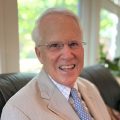
Gov. Brian Kemp described at the Kiwanis Club of Atlanta’s luncheon this week how much of his current agenda is focused on global issues, ranging from breaking up the narcotics activities of Georgia-based criminal gangs to foreign direct investment.
He began his presentation Jan. 28 at the Loudermilk Conference Center downtown by announcing his administration’s crackdown on the gangs serving as distribution networks for Mexican drug cartels and acknowledged that he appointed Vic Reynolds as head of the Georgia Bureau of Investigation because of his experience prosecuting gangs as Cobb County’s District Attorney.
He said that he recently elicited the support of the state’s sheriffs in this initiative and is in the process of developing a comprehensive database to assist in tracking the gangs’ activities.
He also said that he shared his wife Marty’s concern about sex trafficking and would combat its presence by having law enforcement watch more closely the activities of truck drivers passing through the state as well as monitor more closely truck stops where, he said, most sex abuse occurs.
While promising to support these law enforcement initiatives, he said that with his wife he would support programs to help the victims renew their lives as members of society.
The governor also addressed local issues such as teacher pay raises and his desire to reduce the amount of testing that Georgia students experience. He promised a review of the state’s foster care programs and discussed the need for state budget cuts as widely reviewed in the General Assembly in recent days.
But the state’s successful integration into the global economy drove his visible buoyancy about its economic condition.
“It’s a great time to be a Georgian,” he said proudly pointing to the state’s full employment numbers, the success of its ports which have experienced record-breaking traffic figures and its continued success as a magnet for foreign investment.
He cited his visit the preceding week to the Korean manufacturer Enchem Ltd. in Jackson County that is to build two new electrolyte and capacitor manufacturing plants, creating more than 30 jobs and representing an investment of more than $61 million.
That investment, he said, represented a ripple effect from the state’s largest investment ever — $1.67 billion —by SK Innovation, a lithium-ion battery manufacturer setting up a massive factory in Jackson County. The company reportedly plans to create 2,000 jobs in the state, and the governor anticipates more suppliers arriving in the state.
In addition, he could have mentioned his formal announcement of four days earlier that the Chinese company Novalis Innovative Flooring would be building its first U.S. production facility in Whitfield County. The new facility will be located adjacent to Novalis’ newly opened North American headquarters and innovation center in Dalton.
But as his allotted time to speak grew short, he preferred to review the presence of Germany’s 800 facilities operating in the state. Recently returned from a trip to Germany where he visited Porsche’s new electric vehicle plant in Stuttgart and visited several other cities including Munich where the state is expanding its economic development office for Europe.
He seemed most excited by the investment of mid-sized Haering GmbH, a chemicals company based in the Baden-Wurttemberg state. The manufacturer of precision components and subassemblies for the automotive industry announced in 2014 that it would put a $54 million plant in Hartwell that is now under construction. The company said it will create 800 jobs by 2025.
Having underscored the importance of Georgia’s Quick Start workforce training program for attracting foreign companies, Mr. Kemp nevertheless was impressed by a Haering program to send 40 Georgian technical-college students to its facilities in Germany to be exposed to the company’s culture, learn how to operate its machinery as well as learn German.
To learn about other Kiwanis activities, click here.