


Green Worldwide Shipping is the presenting sponsor of Global Atlanta's Trade Channel. Sign up here for monthly global trade updates.
Amid backlash over global trade, the Asia Pacific Economic Cooperation is putting a renewed emphasis on telling the story of how global integration can be an uplifting force for all levels of society.
That was the thrust of a high-level executive forum for the 21-country group in Atlanta Friday, March 1, where business leaders mingled with government officials to ensure discussions were seasoned with a knowledge of real-world business conditions.
The APEC Business Advisory Council was created in 1995 to provide that reality check so that, as one delegate put it, the group doesn’t come up with “ivory tower” solutions.
Two of the three members of the council’s U.S. board work for Atlanta-based companies — UPS and NCR Corp. — which is one reason the Seattle-based National Center for APEC chose Atlanta for the early 2019 forum. (Another reason might well be the city’s airport: Many officials were headed from Atlanta to Chile, where working group meetings are taking place in advance of this fall’s APEC forum in Santiago.)
APEC is a diverse set of Pacific Rim economies ranging geographically from Chile and Peru in South America to Brunei and New Zealand in Asia and Oceania. It’s the only major Asia forum that still includes U.S. and China — and Taiwan to boot (known as Chinese Taipei for APEC purposes.)
Both of the U.S.’s NAFTA partners are also members, and APEC includes many Southeast Asian economies at varying levels of development and growth, from hyper-connected Singapore to massively populous Indonesia to Papua New Guinea, which tends to lag its neighbors.
Unlike the World Trade Organization or multilateral deals like the Trans-Pacific Partnership, APEC’s recommendations are non-binding, leading some to question its relevance. Others say that it’s that very openness that leads to frank discussions and ideas that can be later built into binding agreements.
Combating Elitism and Humanizing Trade
Some at the Atlanta forum admitted that APEC, like other multilateral groups, has been seen as an elitist organization, with the benefits of its recommendations too often accruing to large companies.
That mirrors criticisms of globalization that have found their home with economic nationalists gaining political prominence in the U.S. and Europe, riding a wave of protectionist promises.
As APEC approaches the 2020 deadline for the goals it set in 1994 to realize free and open trade in the Asia Pacific region, some at the forum said it’s high time to make a very public return to APEC’s founding ethos: using the power of trade to improve common people’s lives.
“It’s time right now to humanize APEC,” said Aida Safinaz Allias, who heads up the APEC 2020 National Secretariat at Malaysia’s Ministry International Trade and Industry.
When it hosts the consequential 2020 forum, Malaysia will be thinking about refining the narrative around APEC’s goals of promoting prosperity and growth, taking into account the issues of complexity and inequality.
Also from Malaysia, Rohana Tan Sri Mahmood, chair and founder of RM Capital Partners, was more blunt during a panel discussion, acknowledging that leaders have to pay deeper attention to the role of trade policy in democracy.
“If we don’t trickle down the benefits to the population at large, we are going to be in trouble,” Ms. Mahmood said.
Phil O’Reilly, managing director of Iron Duke Partners in New Zealand, added that the countries have gotten so tied up in the acronyms and nomenclature of trade deals, that they have forgotten the very purpose behind their work for their people.
“It’ not just to make money; it’s to have a better life,” said the ABAC member.
Much of this newfound emphasis can be attributed to Chile, which is prioritizing inclusive growth and sustainable development as it heads APEC this year.
Rodrigo Yañez, director general of Chile’s General Directorate of International Economic Relations, said in a luncheon speech that while concerns articulated by trade opponents can be valid, the solutions are not found in retreating from the forums that ensure their voices are heard.
“While most of you in this room understand full well the benefits of trade — if you didn’t you would not be here — we also know there are legitimate questions and concerns by those that feel left aside of the benefits of trade and globalization,” Mr. Yañez said. “But the solution to these concerns and to other to non–tariff concerns is more likely to be found around the negotiating table than by imposing tariff measures.”
Digital Inclusion
Chile’s focus also colored the theme of the Atlanta executive roundtable, which centered on digital transformation as a way to drive inclusive growth. APEC members, whose countries represent 58 percent of the global economy, believe they can forge solutions based on the sharing of best practices.
Multiple delegates told Global Atlanta that APEC, while not a place for hard-nosed negotiations, can play the role of “incubator” for good policy ideas, especially amid skepticism of the World Trade Organization and the heightened tension between the U.S. and China.
“I think it’s more relevant than ever for the U.S., in part because we are not moving forward with the TPP or a series of regional agreements, so this really is the way that we engage with the largest number of Asia-Pacific countries,” said Ambassador Robert Holleyman, who served as deputy U.S. trade representative for the Obama administration.
That’s especially true since the U.S. has begun to eschew binding multilateral forums under Mr. Trump, who frames trade deals in terms of relinquishing sovereignty.
Mr. Holleyman, now president of trade consultancy C&M International, says there is precedent for APEC playing a constructive role, from the Information Technology Agreements eventually adopted by the World Trade Organization to today’s frameworks for e-commerce and privacy.
APEC’s Cross-Border Privacy Rules, for instance, offer an alternative to Europe’s General Data Protection Regulation that is more feasible for smaller, emerging economies, while still being interoperable with the European-designed GDPR, he said in an interview with Global Atlanta.

The Role of Employers
Package delivery and logistics giant UPS has a vested interest in all of these debates, and lends its voice to the APEC Business Advisory Council along with other major forums around the world.

Laura Lane, the company’s president of global public policy, says APEC can be a powerful instrument in the sharing of best practices that can result in concrete change, to the benefit of the entrepreneurs whose markets can be expanded by increased openness.
She cited the APEC “pathfinder agreement” on de minimus shipments — where the 21 nations have recommended (not mandated) that countries offer streamlined customs processes for goods valued at less than $200. A few have taken up the challenge and are providing valuable feedback to the group.
“(In APEC), countries feel they’re not being forced to implement things, but it’s a testbed for a lot of good ideas, and then as more and more countries see the value and virtue, it makes it easier when you go into a multilateral setting to bind those commitments,” Ms. Lane said.
She added that it’s not about piling on more regulation, but giving companies the tools and clarity they need to go global — a key tenet of UPS’s outreach around the world.
“It isn’t about checking a box and saying we got the following agreements done with the following commitments. It’s about how many businesses we have empowered to do more,” Ms. Lane told Global Atlanta in an interview.
UPS is focusing on driving more participation from small businesses, especially those owned by women, who face hurdles the world over, but especially in parts of Asia and in other regions where their ability to own property and access education and capital is restricted by local laws.
Ms. Lane, who spoke at the World Affairs Council of Atlanta’s March 8 International Women’s Day breakfast in Atlanta a week later, said the company is partnering with the White House and other governments to help remove some of these barriers, even as it aims to streamline globalization for all players.
“It shouldn’t be a gender issue; the evaluation should be based on, is it a good product, is it a good company to invest in?” she said.
Singapore, meanwhile, is countering the ill effects of trade by building the capacity of its entrepreneurs to go global and helping workers find new positions when jobs are lost due to external competition or technological advancement, said Ho Meng Kit, CEO of the 26,000-member Singapore Business Federation.
The Skills Future initiative, launched by the government, has helped retrain workers from “adjacent industries — like oil technicians to manufacturing, for instance — and even has provided wage supplement to help companies offset the cost of hiring a mid-career professional with little experience. But putting together all the necessary players isn’t easy.
“This is a lot of work. It’s not just that you do a policy and it’s done. It’s really about the implementation,” Mr. Ho said during an interview at the Atlanta event.
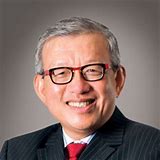
Businesses have a larger role to play in persuading their employees of the benefits of global trade, he said, citing the findings of Edelman’s Global Trust Barometer, which shows that employees trust their employers to do what’s right more than the government or even NGOs.
“It gives credence to the role of business in advocacy,” Mr. Ho said.
Ms. Lane agreed — noting that sometimes trade is unfairly targeted and that companies can help bring reality to that conversation, telling the stories showing the benefits of interconnection.
“In reality, a lot of the dialogue needs to be about how we can work together to create fulfilling jobs in a more modern economy and build on that trust that people have in the companies that they work with to empower them to be at that next level, ready for that next kind of job opportunity.”
The day after the public executive forum, APEC Business Advisory Council members visited the UPS Smart Hub in west Atlanta during a day full of working-group meetings touching on catastrophe bonds, data privacy and WTO reform.