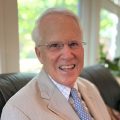
While declaring that relations between the United States and Russia are at a low point (possibly at their lowest point since the end of the Cold War), Russia’s ambassador in Washington, said in Atlanta that he remains “optimistic about the future, but not the immediate future. It will take some time to get back to normal relations.”
Ambassador Sergey I. Kislyak said that “the rules of the Cold War were well understood but we haven’t been able to create post Cold War rules.” He cited increased business and trade, educational and people-to-people programs as avenues for improving relations.
Other positive examples of cooperation even in the face of poor relations included the joint efforts on the space station and to contain the proliferation of nuclear weapons in the world, especially in Iran where Russia, he said, worked with the U.S to broker a recent nuclear agreement.
The flyover of Russian planes over a U.S. guided missile destroyer in the Black Sea the day before the April 29 luncheon was the latest indication of the tensions between the two countries.
When asked about the incident of Russian planes “buzzing” over the destroyer, he replied quizzically that he didn’t know how to translate “buzz” into Russian, and then dismissed the incident on grounds that unarmed planes were flying over international waters as the destroyer armed with anti-ballistic missiles was only 38 miles away from an important seaport.
Mr. Kislyak spoke at the Capital City Club downtown at the invitation of the Atlanta Committee on International Relations during a visit that also included stops at the Coca Cola Co., CNN for an off-the-record briefing and Kennesaw State University that is in the process of developing its forthcoming “Year of…” program, to focus on Russia.

Mr. Kislyak, who has served as ambassador since September 2008, addressed many of the most controversial issues between his country and U.S., including Russia’s role in Syria and the Ukraine, its ties to the Baltic countries and his country’s antagonism to NATO.
He stressed that Russia was geographically closer than the U.S. to several of the areas mired in controversy and, therefore, faced compelling security issues poorly understood in the U.S. generally.
Concerning Syria, he spoke in defense of Bashar al-Assad Assad, saying that much of the commentary about Russia’s support of the Assad government was “simplistic.” He cited the fears of Syrians who support Mr. Assad that they would be decapitated by Islamic terrorists if he is overthrown.
[pullquote]“It’s much more complex if you remove Assad to live in peace in [Syria].”[/pullquote]
“It’s much more complex, if you remove Assad, to live in peace in their country,” he added.
The support by the U.S. and Russia of different forces in Syria, however, did not prevent them from their joint efforts to remove chemical weapons from the country, which, he said, they had managed to do successfully together.
In response to a question, he spoke at length about Russia’s incursions into Crimea and the eastern regions of the Ukraine explaining that they considered the current government as having attained power through an outright coup d’etat of the elected government of Viktor Yanukovich, which risked the continued well-being and security of Russian-speaking Ukrainians.
“We want all Ukrainians to live in peace in their country,” he said in immediate response to the question, and then said that the current government was a victim of “illusions, victims of the European community and its leadership.”
He severely criticized U.S. sanctions imposed in the wake of the annexation of Crimea and said that a trade treaty between the Ukraine and the European Union would have flooded Russia with European goods and undermined Russian jobs.
He also said that Russia’s trade agreement with the European Union that had been negotiated over a 16-year period would be threatened if its markets were flooded by European goods from the Ukraine.
In response to a question about Russia’s involvement in the Republic of Georgia, he severely denounced the administration of former Georgia president, Mikheil Saakashvili, for provoking the conflict with Russia, which, he said, “forced” the invasion of the border regions of Abkhazia and South Ossetia. Mr. Kislyak began his posting as ambassador just a month after the U.S. and Russia clashed over the breakaway region in Georgia, and stuck to his government’s line on all of the issues.
“The situation in Georgia was forced on us,” he added. “Saakashvili killed dozens of his own people, What would you have done if peacekeepers were killed in this way?”
He also was Russia’s first permanent representative to NATO while serving as its ambassador to Belgium in Brussels from 1998-2003, which didn’t deter him from criticizing the alliance. Russia has suspended all practical cooperation with the alliance, which it considers hostile because of the accession of new allies from Central and Eastern Europe.
Mr. Kislyak was especially critical of the placement of NATO troops for training in Poland. “This doesn’t tell us about a stable future,” he added.
While he was the permanent representative to NATO, he had worked with the U.S. to establish a chemical weapons convention in the face of the possibility of their use by terrorists. “We had a history of working together to fight nuclear terror,” he said in a briefing following the luncheon in which he quickly sketched the history.
But the cordial relations between NATO and Russia deteriorated, he added, when Russia was forced to take a subordinate position.
“We are Russia,” he added, “We have so many interests and we have capabilities to contribute on an equal basis, not to be told to sit in the waiting room while discussions are being taken.”

He also recalled comments of Jen Stolenberg, NATO’s secretary general, that good relations between Russia and NATO were important “in good weather, but even more important in bad weather.”
But the moment that bad weather came in, Mr. Kislyak said, the relationship was broken.
The weather apparently isn’t much better over the Baltics where he said that Russian speakers are treated as second-class citizens and on their passports they are listed as “non-citizens.”
Despite these controversial issues, he doesn’t foresee a return to the Cold War, and underscored Russia’s position that it is open for business. U.S. investment has dropped to $7 billion, he said, in spite of the discussions he has had with the CEOs of U.S. firms doing business there who find it a profitable market.
“We have 148 million people who are able to pay,” he said, adding that the country’s economy is not as dependent on oil and gas as is often suggested.
He also cited the Eurasian Economic Union (EEU), an intended counterweight to the European Union, a customs union of former Soviet states whose rules came into effect on Jan. 1, which is composed in addition to Russia of Armenia, Belarus, Kazakhstan, and Kyrgyzstan with an estimated combined population of more than 183 million.
As a former deputy director and director in the 1990s of the department of international scientific and technical cooperation at the Foreign Ministry, he said that “normalcy would benefit us both,” referring to “what we could do together for stability, science and technology.”
In addition, he candidly admitted that the U.S. is superior to Russia in the transfer of technology from the discovery stages into market operations. “The U.S. is much better at that,” he said.
When questioned about the extent of corruption in Russia, he cited a recent report that placed Russia and the U.S. at the same level in terms of the state of corruption for doing business, and added that “We’re no ‘Snow Whites’, and may I suggest that you aren’t either.”
Concerning Kennesaw State’s “Year of…” program, he told Global Atlanta that there had been no formal agreement, but that he was supportive of the initiative and, in fact, quite envious of the students who would be involved.
“The students will have a full year focused on Russia and be exposed to something otherwise not available to them,” he said. “I think this is enormously important so that they will know what they are talking about and how it developed.”
As ambassador, he added that he had worked to establish a partnership with American University in Washington to develop an Institute of Russian History and Culture, which encourages students to visit the country and learn “what it is and what it is not.”
Robert Kennedy, who chairs the Atlanta Committee on International Relations, thanked the ambassador for his willingness to address the luncheon and reminded the attendees that only through engagement can a complete understanding of different points of view be understood.
To learn about other program of the ACIR, click here.

The Dean Rusk International Law Center at the University of Georgia is the presenting sponsor of Global Atlanta's Diplomacy Channel. Subscribe here for monthly Diplomacy newsletters.