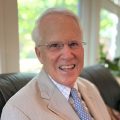
Belgium’s ambassador to the U.S., Dirk Wouters, told Global Atlanta that he appreciated the “attractive state of mind” he experienced during his two day visit to Atlanta June 14-15, and especially praised the bioengineering and biosciences research he saw at the Georgia Institute of Technology.

He also was highly complimentary of the luncheon reception hosted by the World Affairs Council of Atlanta downtown, saying “I wish we had a World Affairs Council in Belgium” due to its mission of educating local leadership as well as encouraging debate about global issues.
Before departing for Hartsfield-Jackson Atlanta Airport to return to Washington from the Coca-Cola Co. headquarters, his last official stop, he had managed over the course of his visit to field questions on a wide variety of issues including trade with the U.S., climate change, China’s trade and investment practices, the stability of the eurozone, security issues, innovation in biotech, news reporting in an age of fake news and the prospects for Belgian eateries in the metro area.
He described that “attractive state of mind” as going beyond Southern hospitality to include an openness allowing Belgians moving to the city “to integrate easily, learn how to team up with local communities and penetrate the (business) eco system.”
Georgia Tech’s bioengineering and biosciences research impressed him for its innovative use of metadata in the diagnosis of diseases and he said that this research would be of great interest to Belgian and European doctors because of their focus on patient care.
He also said that he was impressed with the city’s large number of cybersecurity firms, which given the world’s concerns about internet hacking and terrorism generally provided products which would continue to be in high demand.
During his interview with Global Atlanta, he said that his greatest concern dealt with the threat of the U.S. adopting more protectionist trade measures. In his discussions with officials of Belgian companies he met here, he added that he found they were concerned about the U.S. government’s lack of clarity about trade practices to an extent affecting their business planning.
 While aware of the “deep, deep roots” of U.S.-European relations, he also said that the relationship should be expanded even further to create the biggest world market “by far.” To achieve this goal, he suggested a close monitoring of China’s trade practices and closer collaboration in harmonizing business standards.
He also said that negotiations proceed more smoothly when the participants are experiencing economic growth, which would be encouraged on both sides of the Atlantic with the adoption of trade agreements such as the Transatlantic Trade and Investment Partnership.
“We want to keep it alive,” he said of the ambitious agreement, but readily acknowledged that the timing is wrong to attempt its passage. He praised Georgia’s agricultural sector for growing enough produce to export, and wryly commented that he had done his best in support of the poultry industry by eating chicken at every meal during his visit.
At the World Affairs Council luncheon, he encouraged businesses to consider investing in Belgium as a gateway to Europe, citing its location near to the majority of the continent’s population and its highly developed networks of ports and logistics capabilities.
When asked about the impact of the U.S. pulling out of the Paris climate accord, he seemed pretty much resigned. “Let’s see where we go,” he said. “The announcement was dramatic in itself, but there have been no acts. It’s still very much ongoing.”
He also remained even handed with the United Kingdom’s decision to leave the European Union. “We want to mitigate the negative economic consequences for both sides while continuing to defend the European project and organize the stability of the eurozone,” he said.
The process of Britain’s withdrawal will entail “long transition periods” he added with the EU negotiators making certain that “they don’t create something that makes it very attractive for others to ask for the same regime or that being out appears more beneficial than being in.”

The Dean Rusk International Law Center at the University of Georgia is the presenting sponsor of Global Atlanta's Diplomacy Channel. Subscribe here for monthly Diplomacy newsletters.