Editor’s note: Obinna Morton contributed reporting to this story
CRISPR, a new biotechnology enabling scientists to splice and edit genes more easily than ever before, has the potential of curing many genetic diseases.
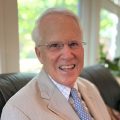
Yet it’s also, according to Dr. Paul Root Wolpe, director for the Center for Ethics at Emory University, a procedure that can modify genetic lines by changing every cell in an embryo’s body, which in turn would be passed on to future generations.
He didn’t evoke “designer babies” in an interview with Global Atlanta. But others have.
It is widely acknowledged that CRISPR raises numerous ethical questions on the safety and uses of this new technology and some scientists have questioned the ethics of its use and even have called for a moratorium on its use.
The ethics surrounding cascading biotech discoveries such as those exemplified by CRISPR have been on Dr. Wolpe’s mind for years.
And as the first senior bioethicist for the National Aeronautics and Space Administration (NASA), he is responsible for formulating policy on bioethical issues and safeguarding research subjects from ill-fated consequences.
While considering the global landscape of regulations safeguarding the future of mankind, “chaos” was the term which came to his mind during the interview.
For a decade he has been considering organizing a summit around ethical issues facing the field in an effort to bring some sort of semblance of order.
“It occurred to me that there is a kind of regulatory chaos in the world community around biotechnology” he said. “Some countries have very conservative policies and others very liberal.”
Even countries such as those in the European Union, which should have common policies, don’t, he added. And the United States is no exception with each state adopting its own.
In an effort to address the issue, he personally set out to encourage thought leaders from around the world to address these scientific concerns during a summit titled BEINGS 2015, held in May at the Tabernacle, which often is a venue for concerts.
In an impressive show of unity, 14 universities in the state joined in the effort, which drew support from many companies and organizations including the Coca-Cola Co., the Marcus Foundation, the Metro Atlanta Chamber, the Georgia Research Alliance, Georgia Bio and Southeast Bio.
BEINGS 2015 also partnered with Central Atlanta Progress, the Atlanta Downtown Improvement District, the Atlanta Convention and Visitors Bureau and received support from the Consulate General of France and John Parkerson, the honorary consul general of Hungary.
Dr. Wolpe’s timing seemed ideal as Georgia seeks to raise its profile as a center for bioscience research and development. In the last five years, 2,400 new bioscience jobs have been created in the state.
Aside from the local support, Dr. Wolpe attracted more than 140 delegates including some of the world’s top faculty and researchers in the field.
Since the purpose of the summit was to draft a “consensus document” focused on ethical questions, he also invited the participation of an array of philosophers, religious scholars, clergymen, government leaders and professionals from the arts, humanities and social sciences.
Even Margaret Atwood, the noted Canadian author, poet and inventor, participated.
Dr. Wolpe told Global Atlanta that he expected only 15 to 20 of the delegates to devote time to writing the consensus document, and seemed genuinely surprised and encouraged that 80 volunteered their involvement in the production of the document and that an additional 40 agreed to review and and critique it.
The document is to be completed for a deadline of Saturday, Aug. 15, at which time he hopes that a statement evoking the principles providing “procedural guidance” can be developed.
By January, he hopes to have a handbook encompassing the topics covered during the summit.
The entire process undoubtedly has raised Atlanta’s profile as a center for research into these ethical questions that accompanies its ambitions as a biotech center, he said, acknowledging his appreciation for both the local and international support that the summit received.
Distinguished faculty that participated in the summit included:
Ruha Benjamin, assistant professor at Princeton University specializing in the interdisciplinary study of science, medicine, and biotechnology, race-ethnicity and gender, health and biopolitics;
Arthur Caplan, head of the Division of Medical Ethics, at New York University, Langone Medical Center, NY;
George Church is professor of genetics at Harvard Medical School and director of PersonalGenomes.org;
Robert Friedman, vice president, J. Craig Venter Institute (JCVI), a not-for-profit genomic research organization in LaJolla, Calif.;
Dan Gincel, vice president for university partnerships at the Maryland Technology Development Corp.;
Erica Haimes, founding executive director of the PEALS Research Center, Newcastle University, Newcastle upon Tyne, United Kingdom;
Jeffrey Koplan, vice president for global health at Emory University;
Yoon-Seong Lee, profession in the Department of Forensic Medicine at the Seoul National University College of Medicine, Seoul, South Korea;
Thierry Magnin, rector of the Catholic University of Lyon, Lyon, France
Ubaka Ogbogu, assistant professor in the faculties of law and pharmacy and pharmaceutical sciences at the University of Alberta, Canada;
Steven Pinker, Canadian-born American experimental psychologist, cognitive scientist, linguist, and popular science author. He is Johnstone Family Professor in the Department of Psychology at Harvard University,
Margaret Somerville, professor of law at McGill University, Montreal, Canada;
Bojana Ginn, an interdisciplinary artist and former MD and scientist, Atlanta;
Karen Rommelfanger, neuroethics program at the Center for Ethics and an assistant professor in the Department of Neurology, Emory University.

GSU-CIBER is the presenting sponsor of Global Atlanta's Education Channel. Subscribe here for monthly Education newsletters.