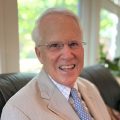
“The Bison in the room is obviously Brexit and what it means for the U.S. economy,” Federal Reserve President and CEO Dennis Lockhart of the Federal Reserve Bank of Atlanta, told attendees of the Eighth Annual Rocky Mountain Economic Summit on Friday.
The bison was his second metaphor this day. He had begun his address with references to fly fishing in the Snake River and the need to be able to “read the water,” but soon afterwards apologized for the “tortured metaphor.” He did add, however, “that a bad day on the river is better than a good day at the office.”

Concerning Brexit, the referendum held in the United Kingdom on June 23 which has resulted in the inevitable exit of the U.K. from the European Union, he said that its outcome “surprised many observers, me included.”
Although “too early to sound the all clear,” he added that financial conditions have mostly returned to the status quo before June 23 despite “a notable exception”: the 10-year Treasury note yield, “which has touched historic lows.” He attributed this development “to safe haven flows reflecting a risk-off posture immediately following he referendum.”
The U.S. economy seems to have weathered the storm well, he added. “As many have stated, it is not a ‘Lehman moment.’”
But Brexit’s economic consequences may reach far into the future. “More immediately,” he said, “there is the question of direct impact of Brexit on our economy. Negative effects could materialize through the trade channel if there is a sustained realignment of the dollar-pound exchange rate. We might also see similar effects in our trade with Europe and the euro area.”
His summation of Brexit’s impact on the U.S. economy follows: “negligible near-term effect; a risk factor over the medium term; high uncertainly that could mount to a persistent economic headwind.”
So what about uncertainty as a factor influencing economic performance?
“Measuring uncertainly is quite difficult, as you would expect,” he said. “We have some tools, but they are imperfect.”
The Federal Reserve Bank of Atlanta has teamed up with the University of Chicago and Stanford University to conduct large-sample surveys of business leaders to gauge how they assess the risk they face and how these risks inform their decisions.
“In a post-Brexit survey a few days ago, roughly one-third of the businesses we surveyed indicated that the result of the referendum made their sales outlook more uncertain,” he said. “They indicated they would be more cautious in hiring and capital spending decisions as a result of Brexit. We had a spirited internal discussion of whether one-third is a big number or not-so-big.”
To read the full version of his address, click here.