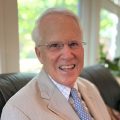
Frederic Lefebvre, who represents in the French National Assembly all French citizens living in the United States and Canada, told Global Atlanta on his recent tour of the Southeast that France needs a global vision that would rekindle the spirit of exploration it experienced in the 16th century and provide hope for its youth in its future.
Under an unusual system adopted by the French government in 2008, Mr. Lefebvre represents one of the 11 constituencies representing French citizens living abroad – the most populous of its kind including at least more than 80,000 French citizens registered in Canada and more than 124,000 in the U.S. He thinks there are many more who have not yet registered to vote in the upcoming 2020 election for consular advisers, including his Atlanta host Dominique Lemoine.
“I am trying to build a new strategy for France – a worldwide strategy for France,” said the former secretary of state for Trade, Small and Medium Enterprises in the government of Nicolas Sarkozy, which was defeated by Francois Hollande in 2012.
Mr. Lefebvre’s political instincts are in high gear these days as he campaigns as one of more than 60 presidential candidates – yes, 60-plus, but the field is to narrow quickly in this first phase meant to cull out those who don’t receive the support of at least 500 public officials, who are willing to sign a petition of support. Those who do obtain the required signatures are to receive almost $1 million to begin their campaigns.
Much as in the U.S. the main themes of the election so far include the economy, foreign policy and immigration, although the mechanics are very different with a ban on advertising in the first four months of the campaigns.
Mr. Lefebvre hits hard on the country’s lack of growth, its high unemployment rate (over 10 percent) and is a severe critic of its social security system, the country’s tax system and the regulations affecting employment, which make it difficult for companies to be successful. Interestingly and certainly in contrast to the U.S. primaries, he said that he declines to involve himself in ad hominem attacks, as he articulates his vision for what France needs to do to be competitive in the global economy, or even to comment on his opponents platforms.
Besides visiting Atlanta where he met with French citizens living here, he visited Charlotte, N.C., with the French ambassador to the U.S., Gerard Araud; and then with members of the French American Chamber of Commerce in Nashville, Tenn.
“It’s very different when I was a congressman in France in the Hauts-de-Seine department close to Paris,” he said. “I had my office hours with my name on the door. Everybody was coming to see me with their problems. Now it is absolutely the opposite. I have to go everywhere; it’s a very different way to serve.”
Except in Asia, no one else has a territory anywhere as large from Vancouver to Montreal in Canada and from San Francisco to Boston in the U.S., many times larger than France itself. From Atlanta he was to go to Washington and then from Washington back to France where, he said, his campaigning will continue.
While in France, he said that he would travel throughout the country to meet with the communities inhabited by immigrants and French citizens from foreign countries. He added that he is developing a special interest in Africa because of the continent’s historic ties with France and the French language, and its fast growing population that is forcasted by the United Nations to triple by the end of the century rising from today’s one billion to 3.6 billion.
As Europe faces a multitiude of immigration crises, he said that he had attempted to foresee these problems and outlined security policies, which he outlined in his first book, a tome of 500 pages full of policy recommendations.
Primary among them was his call, he said, for a European police force to monitor Europe‘s borders. The idea has been turned down often, he added, due to the expense, a mistake in view of the large sums that have had to be provided to Turkey because of the failure of the current policies.
He favors the American model, which manages security risks away from its border, outside of the country through partnerships with other border officials. The U.S. has established “hot spots” in airports and border crossings where trained officers have the tools to detect passengers in possession of fraudulent documents.
He also has called for the closing of all the Salafi centers in France where ultra conservative, radical versions of Islam are taught.
Meanwhile as a member of the National Assembly, he said he is pressing for changes in tax laws affecting French people living in the U.S., who, he said, are expressing their anxiety about the “FATCA” laws that have been put in place both in France and the U.S. to diminish tax fraud and money laundering.
Other tax laws, according to Mr. Lefebvre, such as the wealth tax, have the effect, however, to keep many French from returning home because the taxes on their savings are so acute that they are deprived of too large a portion of their retirement income to return.
With the election to be held in 2017, it’s a sure bet that he will be back in Atlanta soon while visiting cities throughout the U.S. and Canada, without doubt one of France’s largest overseas constituencies, pressing his vision of an activist France seeking to extend its influence throughout the world and encouraging its youth to become global citizens who retain their loyalties to their native land as did their 16th century predecessors.

The Dean Rusk International Law Center at the University of Georgia is the presenting sponsor of Global Atlanta's Diplomacy Channel. Subscribe here for monthly Diplomacy newsletters.