


Editor’s note: Since its founding in 2016, Georgia State University’s Center for Urban Language Teaching and Research, or CULTR, has become a key convener for vital discussions on enhancing inclusive language instruction among underserved communities and institutions in metro Atlanta and beyond.
A touchstone event each year is the Global Languages Leadership Meeting, a networking luncheon that allows local organizations from the business, education, nonprofit and government sectors to showcase how they’re making use of global and linguistic competencies in their daily activities.
Past attendees including Mercedes-Benz, Cox Automotive, the French Consulate in Atlanta, Marriott International, Metro Atlanta Chamber and more have come together to discuss the importance of language learning and cultural competence as essential skills for an emerging global workforce.
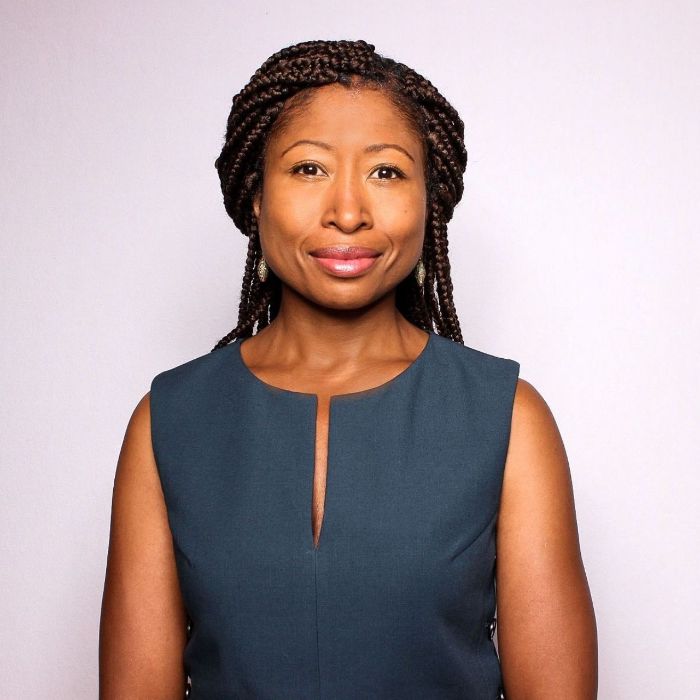
Amid the COVID-19 pandemic, the sixth annual meeting is going virtual on May 21 but will provide an interactive online environment where attendees can connect with exhibitors and each other before hearing a keynote address from Dr. Angela Jackson, managing partner of Future Work at New Profit, a national venture philanthropy organization which seeks to close the career-readiness gap for Americans from under-resourced backgrounds.
As a preview of her speech, CULTR conducted a sponsored interview with Dr. Jackson on the intersection between global skills and New Profit’s goals under its Future of Work Grand Challenge.
CULTR: How do you envision the importance of global skills and a global mindset within the framework of the “future of work?” What are those global skills?
Dr. Jackson: The “future of work” is now. In the wake of the pandemic, millions of workers have been displaced. But we know that COVID won’t be the only disruption felt by workers, and we have been working to prepare workers for future changes in the job market – from automation to crippling student debt to another health crisis. This context is not uniquely American.
Before joining New Profit, I founded the Global Language Project because I recognized language skills as a core competency that individuals need both in the United States and on a global scale, enhancing cognitive skills and fostering a global mindset.
Succeeding in the workplace of tomorrow will require 21st-century skills — meaning not only the technical expertise demanded by the digital workplace, but also “soft skills” that enable workers to effectively lead a team, communicate with others and build inclusive cultural awareness.
CULTR: You’ve been working at New Profit on an initiative called the “Future of Work Grand Challenge.” Can you briefly tell us about this?
For context, New Profit is a national venture philanthropy organization that backs and partners with social entrepreneurs advancing equity and opportunity in America. The question at the root of our existence is, “Why don’t the best social innovations scale like commercial innovations do?”
Right now, a major focus of my work is the Future of Work Grand Challenge, powered by XPRIZE, MIT Solve, and a coalition of partners and funders. The Grand Challenge is a cross-sector effort to rebuild the economy and create a future of work that works for everyone, distributing up $6 million in collaborative funding. Our goals are ambitious: By the end of the Challenge, we aim to have rapidly re-skilled 25,000 workers for immediate and long-term success in the American economy.
The participating entrepreneurs won’t unlock the full funding until they can demonstrate that workers are heard, and that they actually get placed in living-wage jobs with access to future economic opportunities. The challenge is designed to spur innovation by putting equity at the core – seeking ideas from diverse entrepreneurs and solutions that serve the most vulnerable workers.
Can you elaborate on that equity piece and how the Grand Challenge will address systemic inequities that impede progress? Do you believe that global skills are a core tool to help overcome this problem?
At their most basic, global skills are human skills involving communication across perceived differences — be they language, culture or nationality. So, people seeking a sustained career will need to have a facility to transact and find commonalities across borders, which incidentally will be one of the “uniquely human” traits that employers will demand in an increasingly automated world.
Black women have been great at doing this, and there are many who have used their role as “proximate leaders” — those educators and social entrepreneurs who have lived the experience of the often-disadvantaged communities they now serve — to create global collaborations.
One example is GirlTrek, a movement founded to improve health outcomes and increase activism in both the U.S. and South Africa. One might think that women in the U.S. and South Africa might face different health challenges, but the founders realized that they shared environmental stressors. Using culturally relevant content and practices they have built a healthy community serving one million women globally. We need to provide more skills training and career wraparound support to people who serve as proximate leaders in disinvested communities.
How do you believe that policymakers, industry leaders, and K-16 educators should contribute to this conversation?
This work can’t be done alone – what we’re talking about here is a global challenge that will require collaboration across industries and stakeholders who will lift up workers and give them a prominent voice at the table.
The Grand Challenge is one part of this larger initiative. As we re-skill and prepare workers to enter the workplace, another piece is ensuring the workplace is ready to receive them and encouraging lifelong learning. Everyone has a role in that – whether it be educators, employers or policy makers who have the responsibility to fund programs like affordable childcare, living wage or health care policies to address the full context of what it means to live and work comfortably.

GSU-CIBER is the presenting sponsor of Global Atlanta's Education Channel. Subscribe here for monthly Education newsletters.