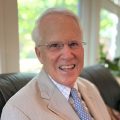
When visiting Atlanta in April last year, Russia‘s ambassador to the U.S said during a luncheon presentation downtown that relations between the two countries were at a low point, perhaps at the lowest point since the end of the Cold War. He had come to Atlanta to discuss with Kennesaw State University officials the “Year of Russia” program, which he viewed positively and with a hint of envy.
“I envy the students,” Sergey Kislyak told Global Atlanta during an interview after the an Atlanta Council on International Relations luncheon held at the Capital City Club, calling the program “a kind invitation.” “They’ll be digging into the history and exposed to views not normally available to them. This is enormously important so they can learn how it (the relationship) developed.”
A year later, that relationship has deteriorated even further. If it was bad then, consider the developments with which Mr. Kislyak, who is now labeled as Washington‘s most dangerous diplomat, has faced in the meantime.
He had to witness the expulsion of 35 members of his staff for their alleged interference in the U.S. election. Encounters on the phone and in person with Gen. Michael Flynn got the general fired as national security adviser after less than a month in office for providing inaccurate accounts about his contacts with Mr. Kislyak to White House officials including Vice President Mike Pence and to the FBI.
As if all this wasn’t enough, U.S. Atty. Gen. Jeff Sessions recused himself from investigation involving Russian hacking and other interference in the 2016 elections on behalf of then candidate Donald Trump when he was serving Mr. Trump as a campaign adviser.

During the ongoing “Year of Russia” academics, artists and dignitaries have come to Kennesaw State from throughout the U.S. providing an historical overview of Russia, its international relations and current context highlighting the country’s position in global affairs.
Wide ranging events already have taken place including a close look at domestic politics and international relations, history, economics and science.
Russia’s rich cultural experience has not been overlooked with performances and lectures on Russian music, literature and film. A closing ceremony is to occur on April 22 including a concert of Russian folk music to be performed by The Atlanta Balalaika Society.

On March 16 it brought together William Hill, a retired foreign service officer and an expert on Russia and the former Soviet Union who now teaches at the National War College, and Victoria Smolkin, an assistant professor of Russian History at Wesleyan University in Middleton, Conn., and a former research scholar at the Kennan Institute of the Woodrow Wilson Center in Washington, to participate on a panel about their views concerning Russia’s current affairs.
Dr. Hill described the current state of relations “a bad patch,” and called for “strategic patience” on the part of the U.S. government. “The Russia we have is not the Russia we would like,” he said.
He, however, was not despairing and encouraged “cooperation when and where possible.” But it was hardly a rallying cry. “We have to keep expectations low so we won’t be disappointed,” he concluded. Dr. Smolkin addressed Russia’s search for identity following the collapse of the Soviet Union.
Both referred to Russian President Vladimir Putin‘s state of the nation address to parliament in April 2005 during which he called the break-up of the USSR in 1991 as “a real drama” and the “greatest geopolitical catastrophe of the 20th century.” During the speech Mr. Putin also referred to the “tens of millions of Russians abandoned outside of the Russian Federation.”
A fundamental change took place in the world views of U.S policy makers with the fall of the Soviet Union, according to Dr. Hill, who recognize the former Soviet republics as totally independent while Mr. Putin considers them still included in a historic Russian “sphere of influence.”
Dr. Smolkin stressed the competition among emerging ideologies for the hearts and minds of Russians under the new order. That psychological struggle is seeking to define for Russians “Who we are; where are we going and how are we going to get there,” she said.
Mr. Putin’s approval ratings, which she said “are going through the roof,” even outpacing the popularity of Russia’s space program and its cosmonauts, reveals his success in connecting with the country’s spiritual roots and the development of a political brand based on Russia’s history as a “millenial civilization.”
She pointed to his installation last year near the Kremlin in central Moscow of the 54-foot high statue of “Vladimir the Great,” a 10th century Slavic leader, who is credited with the introduction of Orthodox Christianity and who is claimed as a founding figure of their countries and civilizations by both Russians and Ukrainians.
While Dr. Hill felt that Mr. Putin had attempted to keep the Ukraine under Russian control by bribing then-President Viktor Fedorovych Yanukovych. But once Mr. Yanukovych faced a revolt in February 2014 and fled to Russia, Dr. Hill said that “Putin and his colleagues had no choice but to take Crimea” because that was where the Russian fleet and 12,000 marines were stationed. “He couldn’t have the fleet dominated by a Western government,” he added.
Both Dr. Hill and Dr. Smolkin viewed the conflict in the Donbass region of the eastern Ukraine not so much as an effort by Mr. Putin to conquer the area or to separate it from the Ukraine permanently, but as a means of continually exerting Russia’s claims.
In Dr. Smolkin’s view Mr. Putin seeks the development of “a spiritual geographic entity” that is to fill the gap left by a failed “narrative of liberal democracy” that proved inadequate to sustain Russia during the 1990s when the country fell into chaos after the Soviet collapse.

Dr. Hill also addressed Russia’s entry into Syria as a means of providing a distraction of the fighting in the Ukraine, to prove itself as a reliable ally by supporting the regime of Bashar al-Assad‘s regime, to not only show off its enhanced military capabilities and arms sales but also to test new weapon systems and to show off its aspirations for its aspirations to establish its status as a great power.
Acknowledging that Mr. Putin must be pleased with his current domestic and geopolitical strategies, not to mention his accumulated wealth, Dr. Hill compared his situation with “the dog who caught the bus.” “Now what?” is the question, he said, with which Mr Putin is faced.
The common conclusion throughout the “Year of Russia” events is the need for small initiatives to be undertaken to reconcile the wide gap in U.S.-Russian relations of the sort involved in combating terrorism, climate change, or working together on nuclear deterrence and research and rescue missions in the Arctic.
These calls for cooperation, interestingly enough, often are aligned with those of Mr. Kislyak expressed in his Capital City Club address a year ago including increased business and trade, and educational and people-to-people programs.
Dr. Hill’s recommendation of “strategic patience” and “keeping the bar low” captured the mood of providing a venue for improved U.S.-Russian relations.
For ongoing ‘Year of Russia’ programs, click here.

GSU-CIBER is the presenting sponsor of Global Atlanta's Education Channel. Subscribe here for monthly Education newsletters.

Atlanta Ballet is the presenting sponsor of Global Atlanta's Culture Channel. Subscribe here for monthly Culture newsletters.

The Dean Rusk International Law Center at the University of Georgia is the presenting sponsor of Global Atlanta's Diplomacy Channel. Subscribe here for monthly Diplomacy newsletters.