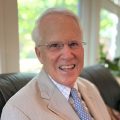
Geoffrey Teneilabe arrived in Atlanta four and a half years ago as Nigeria’s consul general for the Southeast and he left on Feb. 2 for Abuja, Nigeria’s capital, as an ambassador.

During an interview with Global Atlanta shortly before his departure, he said that he would be leaving with a sense of accomplishment “From the feelers that I could get, I think generally people are very happy about my service,” he said, calling it “polite and efficient.”
Among his accomplishments, he cited his efforts to improve the efficiency of the consulate on Roswell Road by shortening the turnaround times for visas and passports, as long as all of the “papers are right.” He added quite philosophically that in these cases “the reward for bad work is more work.”
His responsibilities at the consulate covered the activities of Nigerians in 16 states and Puerto Rico, which he thinks is the largest area of responsibility of any of the more than 60 consulates based in Atlanta.
He also has connected with American Nigerians in an effort for them to go beyond sending remittances back to Nigeria. World Bank figures note that in the past 4 years $20.6 billion dollars were received by Nigerians in remittances from overseas.
“The majority of these would come from the United States and Europe,” he said. “And they are important because they help Nigerian families with their income, medical care, school fees and help pay for emergencies.”
Without mentioning the country’s ambitious Vision 20: 2020 economic plan that aims at making Nigeria one of the 20 largest economies by the end of this decade, he was emphatic about where the immediate opportunities for diversifying the country’s economy lie: agriculture, infrastructure and mineral resources.

As the price of oil plummets on which Nigeria has traditionally been dependent, it is essential for the country to diversify its economy, he said, adding that the moment is right for overseas investors to help develop more economic sectors.
In his many encounters with members of the Nigerian diaspora here including the Association of Nigerian Physicians in the Americas (ANPA), he said that he has tried to encourage them to invest and develop networks there.
Much of his time has been devoted to diplomatic work as well. For instance, when the Young African Leaders delegations from Nigeria under the Obama administration’s African outreach have been in town he has hosted them at his residence, along with many members of the local Nigerian community here.
Or, for instance, when the highly successful Nigerian businessman, Sir Eneka Offor, visited Atlanta to make a $10 million donation to the Carter Center to help its efforts in the eradication of river blindness in Nigeria, Mr. Teneilabe’s role was behind the scenes.

But when his old boss, Goodluck Jonathan, the former president of Nigeria who served from 2011 until his defeat in March of last year, came to Atlanta in January, he was out front accompanying him on a tour of the headquarters of the Southern Christian Leadership Conference, the King Center and joining him at the Hope Global Forum, which was focused for the first time on sub-Saharan Africa.
Mr. Jonathan also visited the Carter Center, which has worked on half a dozen health initiatives in the country since the early 1990s, and then meeting local high school students because he is in the process of developing a foundation that will be focused on his country’s future and assisting its youth to become productive citizens.
Recalling his days a a special political assistant to Mr. Jonathan and then as an international adviser, Mr. Teneilabe said that the former president had come to Atlanta to learn more about how to set up and manage a foundation in addition to promoting the development of his country.
“He took his defeat in stride,” he said of Mr. Jonathan’s reaction to his loss, adding that even before all the results were counted he had telephoned Muhammadu Buhari to concede the election.

“He said that he is for service,” Mr. Teneilabe added. “Yes, he could have contested the election and his loss in the courts, but he decided not to. He foresaw that there could be bloodshed and he said, ’No ambition of any politician is worth the blood of any Nigerian.’”
The bloodshed caused by the Islamist insurgency perpetuated by the Boko Haram militant group that reportedly has killed 20,000 people and displaced some 3 million others out of a population of more than 173 million has been referred to as one of the causes of Mr. Jonathan’s defeat.
But despite the evident extent of Boko Haram’s evil doing, Mr. Teneilabe said that it represented only “a passing phase that will be solved,” and that the militants no longer control any specific property in the country and are limited to attacking “soft targets.”
“Boko Haram is evil,” he added. “And evil can’t endure forever.”
Although he has left for a new assignment at the Ministry of Foreign Affairs, his ties to Atlanta will remain strong, he said, not the least because he has three family members continuing to live here.
He also is aware of the Sister City relationship between Atlanta and Lagos, Nigeria’s largest city with a population of more than 20 million.

“There are many ways that the relationship can grow,” he said referring to Atlanta-Lagos ties and those between the Southeast and Nigeria more generally.
“The U.S. is still the largest economy in the world, a center of innovation, science and technology,” he said.
Aside from economic ties strengthening, he suggested that many educational opportunities existed, particularly as globalization increases and the world becomes more interdependent.
D.O. Falowo is serving as the current consul general. To go to the consulate’s web site, click here.

The Dean Rusk International Law Center at the University of Georgia is the presenting sponsor of Global Atlanta's Diplomacy Channel. Subscribe here for monthly Diplomacy newsletters.