


Green Worldwide Shipping is the presenting sponsor of Global Atlanta's Trade Channel. Sign up here for monthly global trade updates.
Editor’s note: Ralf Heckner, Switzerland’s ambassador to the United States, visited Atlanta on Dec. 1 for a lecture at the Atlanta Council on International Relations, continuing in a long line of Swiss diplomats who have invested time laying out the country’s priorities in the city.
His visit came just weeks after the U.S. and Switzerland landed a trade deal with the Trump administration reducing 39 percent tariffs on Swiss products to 15 percent, taking a step toward restoring predictability in the trade relationship. The deal includes $200 billion in Swiss investment commitments, including $67 billion set to be carried out in 2026 by companies like Roche, Novartis, ABB and Stadler, the last of which built the new rail cars that MARTA will put into service ahead of the this year’s FIFA World Cup. It’s unclear how many of these investments were in the works before the deal was announced.
Global Atlanta briefly met Mr. Heckner in Atlanta, then caught up with the ambassador via email to discuss the impact of the deal on the bilateral relationship, updates on the Swiss diplomatic presence in the Southeast after the retirement of Consul General Urs Brönnimann, and how Swiss companies can deepen their engagement with a region the ambassador sees as dynamic and vital to Swiss interests in the United States.
Global Atlanta: What precipitated your visit to metro Atlanta? What were your objectives and the outcomes of the visit? How does the embassy view the importance of the Southeast U.S. when it comes to economic diplomacy?
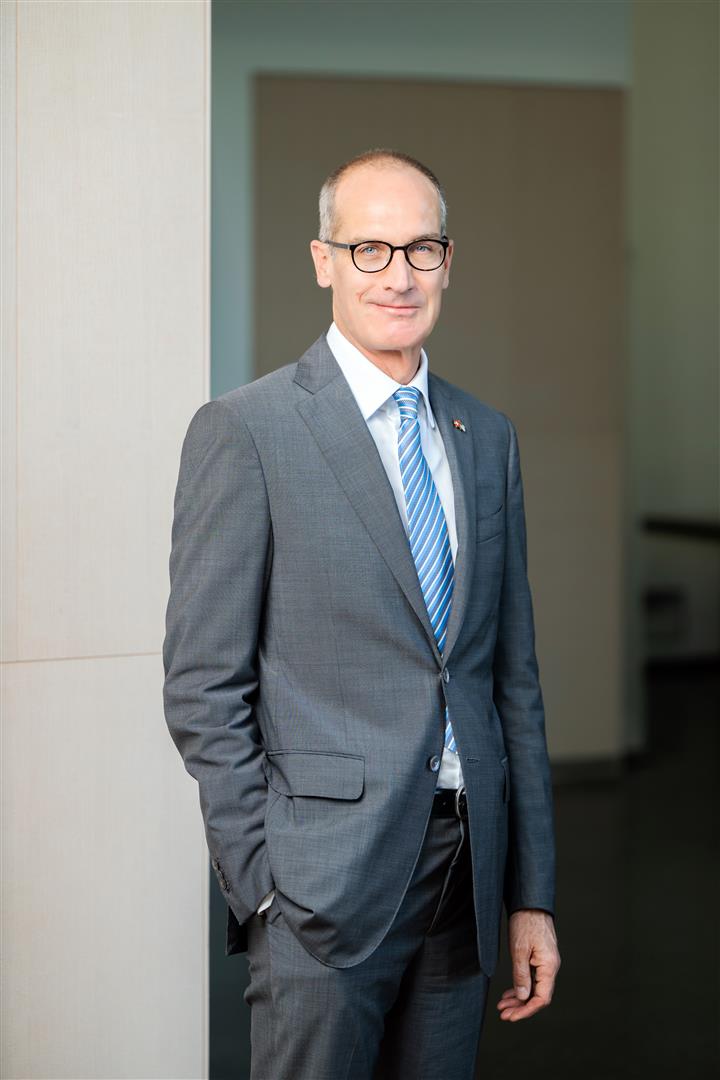
Ambassador Heckner: As Ambassador of Switzerland to the United States, my mandate is to represent and advance Swiss interests across the entire country – work that cannot be done solely from Washington, D.C.
My visit to Atlanta was part of the Embassy’s broader strategy of sustained subnational engagement. The Southeast has emerged as a key hub for advanced manufacturing, life sciences, energy, logistics, and technology, and Swiss companies play a meaningful role in that growth.
My objective in all my engagements is to strengthen relationships with business, academic, and civic leaders, while gaining firsthand insight into a region’s economic priorities and opportunities.
From the Embassy’s perspective, the Southeast is an increasingly important pillar of economic diplomacy. Swiss companies continue to expand their presence here by building manufacturing facilities, investing in research and innovation, and creating high-quality jobs. Atlanta exemplifies this momentum, and the visit allowed us to highlight Switzerland’s long-term commitment to the region and its continued economic success
Switzerland and the U.S. reached a framework deal a few days before your visit —how important was that after Swiss companies had faced a 39 percent tariff blindside for many months?
The agreement was a welcome and important development, as it restored more predictability for Swiss companies. Swiss firms are long-term investors in the United States, and stability is essential for planning, hiring and expanding operations. The reduction in tariffs to 15 percent created a more manageable environment for business and demonstrated that, even in challenging circumstances, Switzerland and the United States can find constructive solutions.
Is Switzerland satisfied with the reduction to 15 percent, or is this something that you will continue to work on with the US administration?
The agreement is an important step to continue the negotiations with the U.S. and we value the commitment shown by the administration to reach an outcome. At the same time, Switzerland will remain engaged with its U.S. partners to ensure a competitive and fair environment for companies. Our approach is pragmatic and forward-looking. We work steadily and transparently, with the overarching goal of strengthening an already strong economic relationship.
Switzerland is one of the U.S.’s largest foreign investors. Philosophically, how are you making the case to the administration about how exports/trade enable Swiss companies’ ability to compete in the U.S. and continue that investment trend?
Our message is straightforward and consistent: Swiss companies invest in the U.S. because they believe in its economic strength, long-term potential and opportunity. They support nearly 400,000 American jobs, invest heavily in research and development, and train workers through apprenticeship programs. These investments underscore the depth and balance of the bilateral economic relationship.
How does Switzerland feel about the foreign direct investment elements of the deal?
Foreign direct investment is one of the strongest pillars of the Swiss – U.S. economic relationship. The agreement recognizes the importance of long-term investment and reinforces the conditions that make the United States an attractive destination for Swiss companies. From Switzerland’s perspective, this is a positive development, as it allows Swiss companies to continue to expand in one of the world’s most dynamic markets and to contributing to American communities through job creation, workforce training, and innovation.
Your country is famously neutral in a world where great-power competition seems to be back en vogue. How is Switzerland thinking about its positioning in a more turbulent geopolitical landscape? Do you worry about the devolution of the Western-led order, and what do you think is the role of Switzerland, home to so many multilateral institutions, in preserving it?
Switzerland’s neutrality has always been active and engaged. It is not passive. It allows us to serve as a trusted partner, a convener, and a facilitator of dialogue. In today’s environment, this role is more important than ever.
We continue to support international law, humanitarian principles, and open channels of communication. In this context, Geneva continues to serve as a platform for diplomacy, from humanitarian discussions to scientific cooperation. While we are mindful of the pressures facing the international order, Switzerland’s focus is on strengthening resilience, reducing tensions where possible, and helping partners find practical solutions. Neutrality, for us, is a tool that contributes to stability in difficult times.
Any comments on Consul General Brönnimann’s retirement and Consul General Rolf Ott’s appointment as consul general here?
Consul General Brönnimann has been a highly valued member of Team Switzerland in the Unites States, and we are deeply grateful for his dedicated service and contributions. At the same time, we are very pleased to welcome Consul General Ott and look forward to working closely with him as we continue to strengthen Switzerland’s relationships in Atlanta and across the Southeast. I am confident that, under his leadership, the Consulate will remain an active and engaged partner in the region.

The Dean Rusk International Law Center at the University of Georgia is the presenting sponsor of Global Atlanta's Diplomacy Channel. Subscribe here for monthly Diplomacy newsletters.
